
Transitioning to a “clean and green” home has had an unexpected benefit – fewer chemicals means the chance of accidental poisoning has been minimized. This is a sponsored post written by me on behalf of Nationwide Mutual Insurance Company. All opinions are 100% mine. I am extremely honored to work with Nationwide Mutual Insurance Company on this #MakeSafeHappen campaign. #ad #IC
I was loading the dishwasher at my parents house and used one of those pods. “Be sure to wash your hands,” my Father cautioned after I closed the door. “Um… why?” “Because it’s toxic to handle.”
Think about that for a minute. The chemicals used to clean our dishes, laundry, etc are too toxic for us to handle. But somehow these chemicals are fine to consume after the dishes or laundry are clean?
It reminds me of when I was going through chemo. The infusion nurses would have on their “HAZMAT Zoot Suits” to deliver my chemo drugs into the IV. Ok… so you are putting this poison into my body… yet it’s that’s dangerous if you are exposed to it?
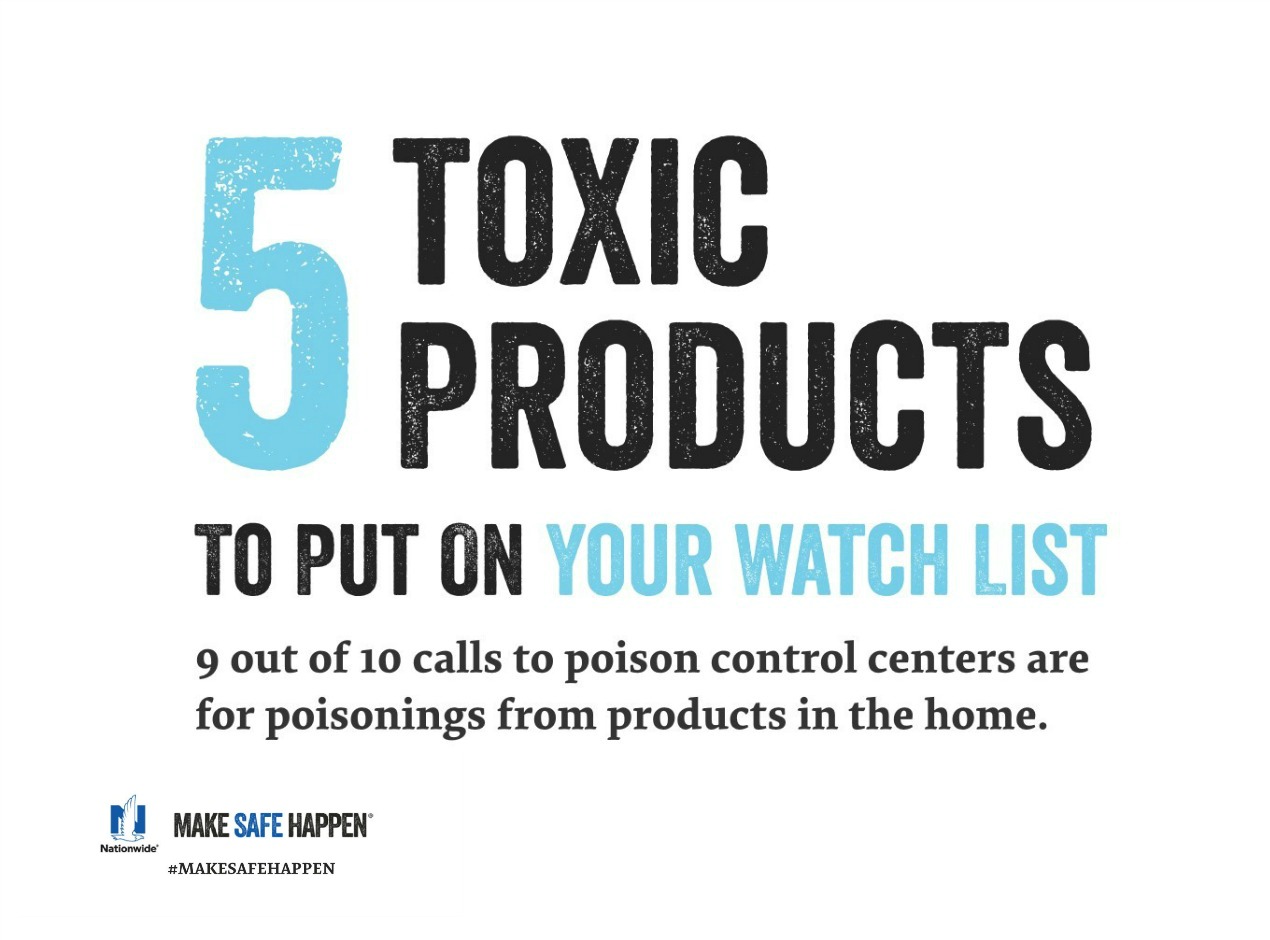
I’m not trying to be alarmist, but there are some scary facts and statistics to consider about the every day home chemicals we use. Children have a way of getting into everything, even household items that can be dangerous. In fact, 9 out of 10 poisonings occur in the home.
According to the Center for Disease Control and Prevention, nearly nine million children are treated at emergency rooms across the country and more than 9,000 children die each year due to accidental injuries.
Statistics
According to a recent Nationwide Make Safe Happen survey of more than 1,000 parents with children under 13 years of age:
- 2 in 5 parents (43%) have kept cleaning solutions in a low, unlocked cabinet (Source: Nationwide survey)
- 36% of parents said they have bought a safety product (e.g., cabinet locks) but didn’t use or install it. (Source: Nationwide survey)
- More than half of all parents (52%) do not safeguard laundry packets from children’s reach (Source: Nationwide survey)
- In 2015, 12,594 kids 5 and younger were exposed to single-load laundry packets. Exposure means e.g., ingested, inhaled, absorbed by the skin or eyes, etc. Not all exposures are poisonings or overdoses (Source: AAPCC)
- 1,009 kids 5 and younger were exposed to single-load laundry packets from Jan. 1, 2016, to Jan. 31, 2016. Exposure means e.g., ingested, inhaled, absorbed by the skin or eyes, etc. Not all exposures are poisonings or overdoses (Source: AAPCC)
- Every day, over 300 children in the U.S. ages 0 to 19 are treated in an emergency department, and two children die, as a result of being poisoned (Source: CDC)
- Each year, Poison Centers answer more than 1 million calls about a child under the age of 5 (Source: Safe Kids Worldwide)
*The Make Safe Happen survey was conducted online by Harris Poll on behalf of Nationwide between November 4, 2015 and November 13, 2015, among 1,001 U.S. parents or guardians of children ages 0 to 12 years old.
5 Risks of Accidental Poisoning
The risks associated with poisoning around the home are vast especially with new household items that can be harmful to the health of your child in additional to traditional cleaners and medicines. Some of the more modern poisoning risks include:
- Hand Sanitizer
- Laundry Packets
- Button Batteries
- Medications
- e-Cigarettes.
And while many parents do or intend to keep at least most of their known poisons up and away it’s easy to get distracted when multitasking or put things within a child’s reach while cleaning/reorganizing.

Hand Sanitizer
The Risk: Hand sanitizers might look/smell like candy but may have dangerous levels of alcohol, presenting risks to children when ingested.
The Advice: Supervise use, keep stored up and away
Supporting Materials:
Think about this: How many moms of babies and toddlers have their hand sanitizer hanging on a key chain attached to the stroller or diaper bag? How often is this left unattended at home or the playground?
Laundry Packets
The Risk: Laundry packets are often bite-size, colorful packages that looks like child toys, yet contain high chemical concentrations which are harmful to children when ingested. Risks also include chemical burns to the eyes, skin, nose, and mouth as well.
The Advice: Use carefully and store them up and away and in original containers
Supporting Materials:
- Prevent Laundry Packet Poisoning YouTube Video
- Pretty Colors. Pretty Shapes. Laundry Packets Can Be Pretty Dangerous
- Laundry Packets Checklist
Think about this: There are many non-toxic options to clean your laundry and dishes!
Button Batteries
The Risk: Button batteries are often small tablet-‐shaped objects that are enticing to children to put in their mouths, but can cause electrical/chemical burns when swallowed. These buttons can be found in kids’ favorite things like mom or dad’s cell phone, singing greeting cards, keys, watches and more.
The Advice: Keep batteries away from kids. For battery operated items make sure the battery compartments are secure (require a screwdriver to open). For battery compartments that do not require a screwdriver to open, use duct tape to keep them from becoming loose or batteries from falling out.
Supporting Materials:
Medications
The Risk: Kids often can’t tell the difference between medicine and candy. Additionally, those child resistant medicine lids and packaging aren’t always 100% child proof. All this can lead to accidental ingestion. It’s also good to check purses and drawers. These are common places where medicines are kept and kids have access.
The Advice: Keep medicines in their original container and stored away from kids. Also make sure you dispose of them properly. To dispose of medications yourself: Remove the medication from its packaging and pour it into a sealable plastic bag. If you’re throwing out pills, add water to dissolve them. Mix in cat litter, sawdust or used coffee grounds and toss it in the garbage. Many drugstores will also safely dispose of unused medicines.
Supporting Assets:
Think about this: How many of you as adults take gummy vitamins in addition to your children? Gummies look and taste like candy.
Additionally, How many of our older kids are on ADHD medicine? While it’s easy to remember to secure adult medicine, how accessible are these stimulants to the littles?
e-Cigarettes
The Risk: E-‐cigarettes are filled with flavorful nicotine that smells and tastes sweet, but the levels of nicotine can be harmful to children.
The Advice: Keep refills and vaping supplies locked up and away
Supporting Materials:
Think about this: Of course you don’t vape. You know better. Is there a teenager in your house? Don’t be fooled into a false sense of angelic behavior. Trust but verify, not only for the safety of your teen, but for the safety of the littles.
How You Can Prevent Accidents
What better time to talk about poison prevention – one of the Make Safe Happen four critical safety focus areas – than Poison Prevention Week, March 20-26, 2016. Poisoning can happen quickly but the good news is that there are easy steps you can take to keep your children safe:
- Use Safety: Although you may be familiar with many of the items that are poisonous, there are many more that also need to be kept out of your child’s sight and reach. It’s best to avoid even using chemicals in front of kids, especially if they are five years old and younger.
- Safe Storage and Disposal: Keep any household cleaners or medicines in the original containers, out of sight and reach, and in a locked cabinet. Immediately dispose of old or unused chemicals and medicines.
- Be Prepared: If you suspect or know that a child has ingested or come into contact with any poison, call the poison Help Number. Take a moment to save the Poison Control number to you phone: (1-800-222-1222).
You Can Make Safe Happen!
Make Safe Happen is a program dedicated to reducing accidental injury – the leading cause of death of children. A champion for child safety and well-being for more than 60 years, Nationwide launched Make Safe Happen in 2015 to empower parents, caregivers and children with tools and resources to make homes safer.
This year, in collaboration with nonprofit partners like Safe Kids Worldwide, Nationwide Children’s Hospital and the American Red Cross, Make Safe Happen will focus on educating caregivers on four critical at-home safety risks. They are: furniture and TV tip-overs, poisoning, drowning and fire. These serious, complex and potentially fatal issues require greater attention and understanding, which is why Nationwide is working to empower and inspire one million safety actions by the end of the year.
As part of the program, Nationwide has created MakeSafeHappen.com where caregivers can find tips and tools, including checklists to make their home safer. And for people that spend more time on their mobile device there is a Make Safe Happen App. The app is owned by signature partner, Nationwide Children’s Hospital, and was developed by the safety experts in their Center for Injury Research and Policy. The App includes room-to-room safety checklists and links to recommended products and allows users to create to-do lists, set reminders and track your progress. The app is available for iOS and Android.
Beyond the digital resources the program partners with Safe Kids Worldwide to host local safety events in cities across the county. A full list of events is available on the website.
Connect and Share
What about you? What are your biggest fears with childhood poisoning? What are some preventative measures you take in your own home?
Love, hugs, and better safe than sorry.
Holly
You must be logged in to post a comment.